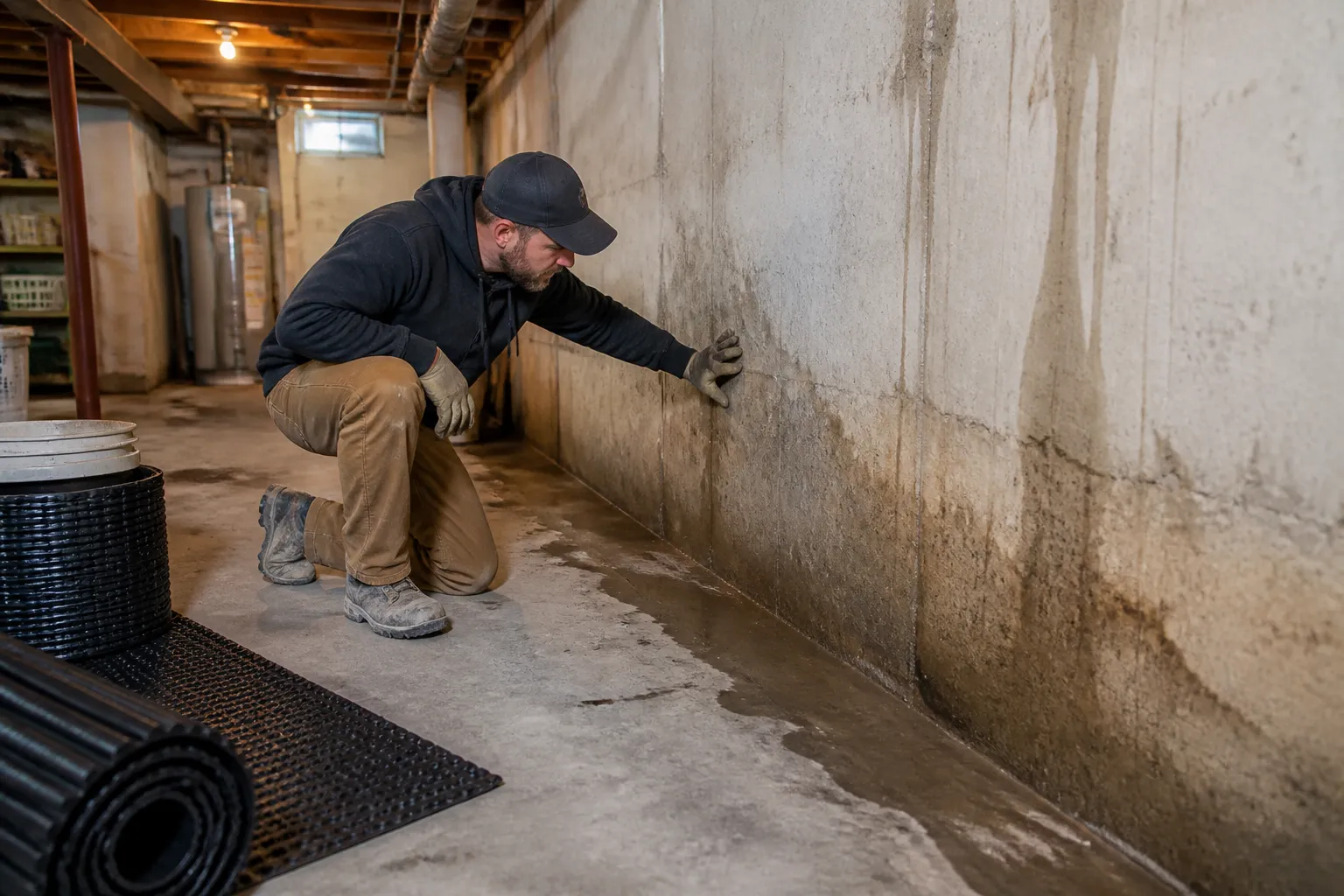
If your basement walls feel damp, you notice water after a heavy rain, or the air down there smells musty, the problem is already asking for attention. Small seepage can turn into stained walls, damaged stored items, and added strain on the structure around your home.
Birmingham Crawl Space Experts helps homeowners take that next step with basement waterproofing services designed to address moisture at the source. If water keeps showing up, we look at where it is entering, what it is affecting, and which repair method fits the space rather than offering a one-size-fits-all fix.
Basement water problems often start with clues that are easy to dismiss. A little dampness can seem harmless until it becomes a steady pattern. Paying attention early can help limit damage to walls, floors, framing, and anything stored below.
If you are seeing more than one of these signs, the basement may need more than surface cleanup. We look at the pattern of moisture, not just the visible spot, so the source can be addressed with the right repair plan.
Basement water intrusion can come from several places at once. Some homes need drainage changes, while others need wall protection, moisture control, or sump pump support. The goal is to reduce the path water follows and make it easier to move away from the foundation area.
Water often enters where the foundation wall meets the floor, through cracks, or through porous concrete that absorbs moisture. These openings can be small at first and become more noticeable as water pressure builds outside the structure.
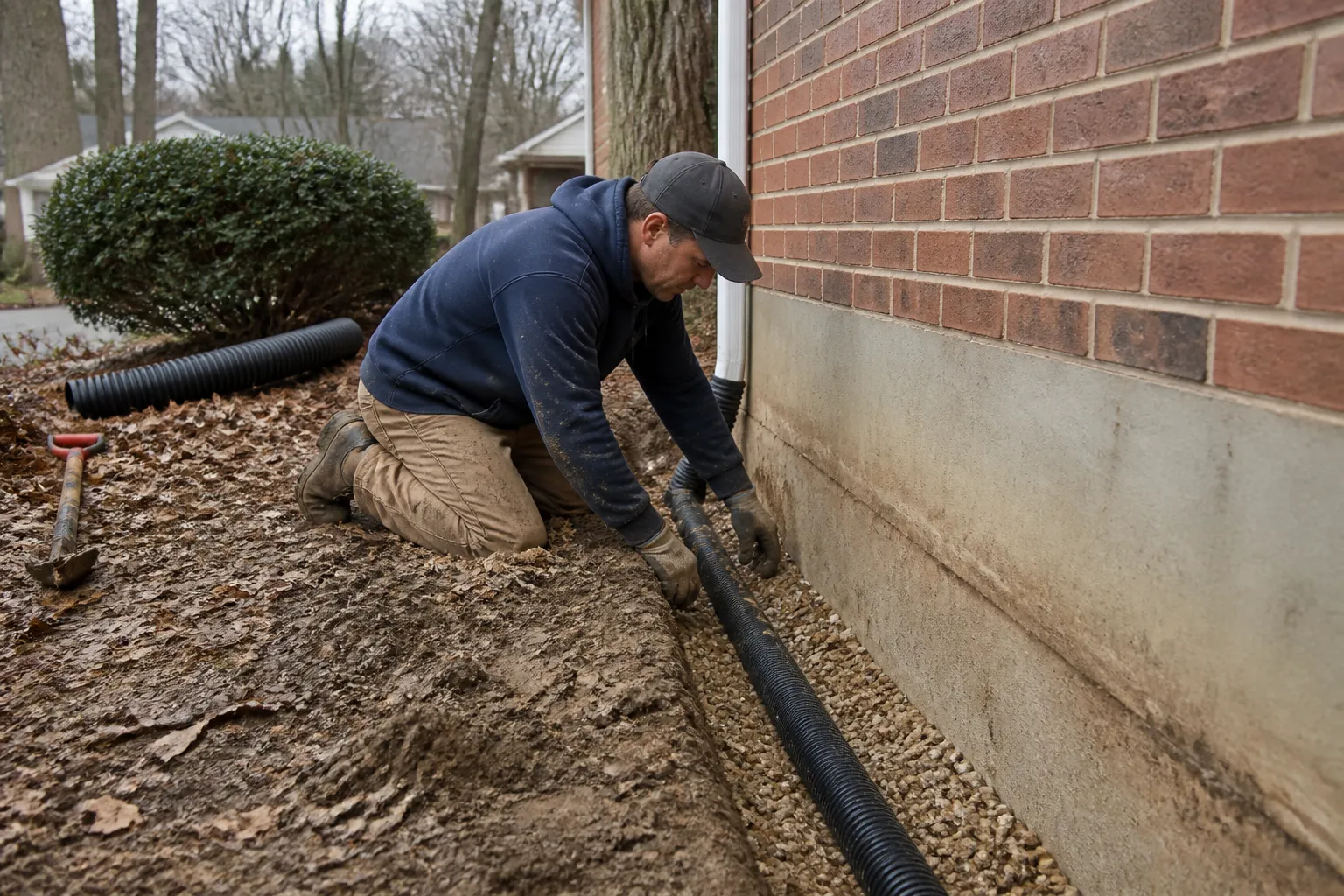
If water is not being redirected away from the home, it can collect near the foundation and work its way inside. French drain installation is often part of the solution when water movement around the structure needs to be controlled.
Some basements stay damp because humidity never gets pulled down to a manageable level. In those cases, basement waterproofing may also involve vapor and moisture barriers, moisture remediation, or sump pump installation to help manage repeated dampness.
At Birmingham Crawl Space Experts, we start by learning how water is entering and where the damage is showing up. That lets us recommend a solution that fits the condition of the basement instead of relying on guesswork.
This process helps homeowners understand what is happening below the home and why a particular repair is being recommended. Birmingham Crawl Space Experts focuses on practical solutions that fit the actual moisture pattern.
Not every damp basement needs the same repair. Some spaces need water redirected. Others need barriers, pumps, or moisture control to keep the area dry and stable.
French drain installation can help collect and move water away from vulnerable areas before it spreads across the basement floor or builds pressure along the foundation. Drainage improvements are useful when water tends to gather after rain or collect at a specific edge of the room.
Sump pump installation helps move collected water away from the basement once it is captured. This can be an important part of a broader waterproofing plan when seepage or groundwater is making the space difficult to keep dry.
Vapor and moisture barriers can help reduce dampness moving through surfaces and limit the conditions that allow moisture to linger. In the right setting, these barriers are paired with other waterproofing work to provide fuller coverage.
Moisture remediation and humidity control can help when the basement is not only wet, but persistently damp. These steps are useful for reducing lingering odors, surface dampness, and the conditions that encourage further damage.
Basement water often affects more than the floor itself. Once moisture gets inside, it can begin to affect materials that support the home or materials stored below.
When basement waterproofing and structural concerns appear together, it is important to handle both. Stopping seepage without addressing damaged materials can leave the home vulnerable to recurring problems later.
Some moisture problems are easy to see, but others show up through subtle changes. If the basement has already been damp for a while, the effects may extend beyond the most obvious wet spot.
These clues help narrow down whether the basement needs drainage work, barrier installation, moisture control, or structural repair. A clear diagnosis is the first step toward a lasting solution.
Homeowners across Birmingham often call when a basement has reached the point where cleanup is no longer enough. Whether the issue is seepage, repeated dampness, or damage affecting the structure below the living space, we work to match the repair to the conditions we find.
Birmingham Crawl Space Experts also serves nearby communities including Hoover, Bessemer, Trussville, Homewood, Vestavia Hills, Irondale, Gardendale, Center Point, Fultondale, Leeds, Helena, and Pelham. If you are comparing notes on basement moisture from one home to the next, the right fix still depends on the details of your space.
Our address is 120 19th St N #200, Birmingham, AL 35203, and we are available Monday through Sunday from 8:00 AM to 8:00 PM.
Repeated damp spots, water stains, musty odors, or puddles near the wall edges are common signs. If the problem keeps returning, waterproofing may be needed rather than simple cleaning.
Yes, especially when moisture control and vapor barriers are part of the plan. If the basement stays humid even without standing water, those measures can make a difference.
No. A sump pump is useful when water needs to be collected and moved away, but some basements need drainage or barrier work first. The right combination depends on the source of moisture.
Cracks can be part of the entry point, but they do not always tell the whole story. We look at why the water is reaching that crack and whether drainage or moisture control should also be included.
Yes. Keeping water out of the basement reduces the chance of damage to boxes, furniture, tools, and other stored belongings.
If moisture has already affected framing, masonry, post-pier areas, or dry rot, we can identify that and recommend repair work alongside basement waterproofing.
If your basement is showing signs of seepage, damp air, or repeated water intrusion, it is worth dealing with before the damage spreads. Birmingham Crawl Space Experts can assess the condition, explain the cause, and recommend basement waterproofing that fits the space.
Call +12052368603 to talk through the symptoms and schedule an inspection for your Birmingham home.
Get Started
Share what you are seeing in your crawl space or basement, and we will help you identify the next best step for moisture control, repair, or drainage improvements.