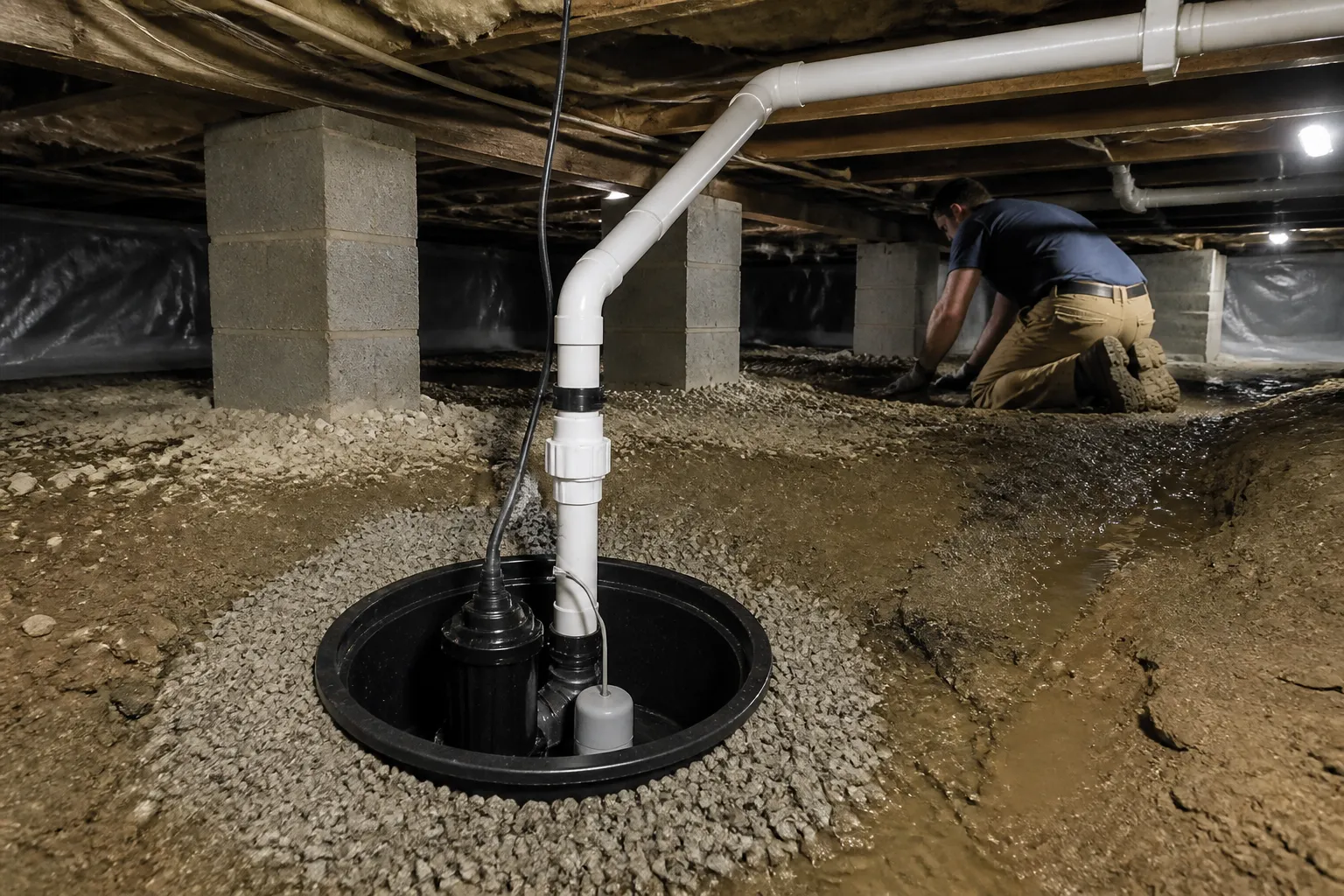
Water pooling under a home is never a small concern. If your crawl space holds damp air, leaves muddy marks on the floor, or shows standing water after a storm, a sump pump may be the next smart step.
Birmingham Crawl Space Experts helps homeowners choose and install sump pump systems that move water away from vulnerable crawl space areas before it builds into a larger moisture problem. We look at where water collects, how it enters, and what kind of setup fits the crawl space layout.
A sump pump is usually considered after repeated water problems start showing up. Some signs are obvious, while others are easy to miss until damage has already spread.
If any of these sound familiar, the issue may go beyond surface moisture. We inspect the crawl space carefully so the pump location and drainage path match the way water is entering the area.
A sump pump collects water at a low point and moves it out through a discharge line. That simple action can make a major difference when the crawl space keeps taking on moisture from seepage, runoff, or repeated pooling.
For many homes, the pump becomes part of a larger moisture control plan. It is often paired with crawl space waterproofing, drainage improvements, vapor and moisture barriers, or humidity control, depending on what the space needs. The goal is not just to remove water after it appears. The goal is to reduce the conditions that let water linger under the home.
The pump collects water at the basin and sends it away from the crawl space so it does not continue spreading across the floor or soaking support materials.
A sump pump does not fix every source of moisture by itself. If water is entering through grading, drainage gaps, or foundation openings, those conditions also need attention.
Birmingham Crawl Space Experts starts with the crawl space itself. We look at the wettest area, the soil or slab conditions, and the path water is taking before any installation begins. That helps us place the sump basin where it can collect water without creating unnecessary disruption.
We check where water is gathering, how moisture is moving, and whether there are signs of existing damage.
The sump pit needs to sit at the lowest practical point so water naturally drains toward it.
We place the pump, set the basin, and connect the discharge so water can move out of the crawl space area.
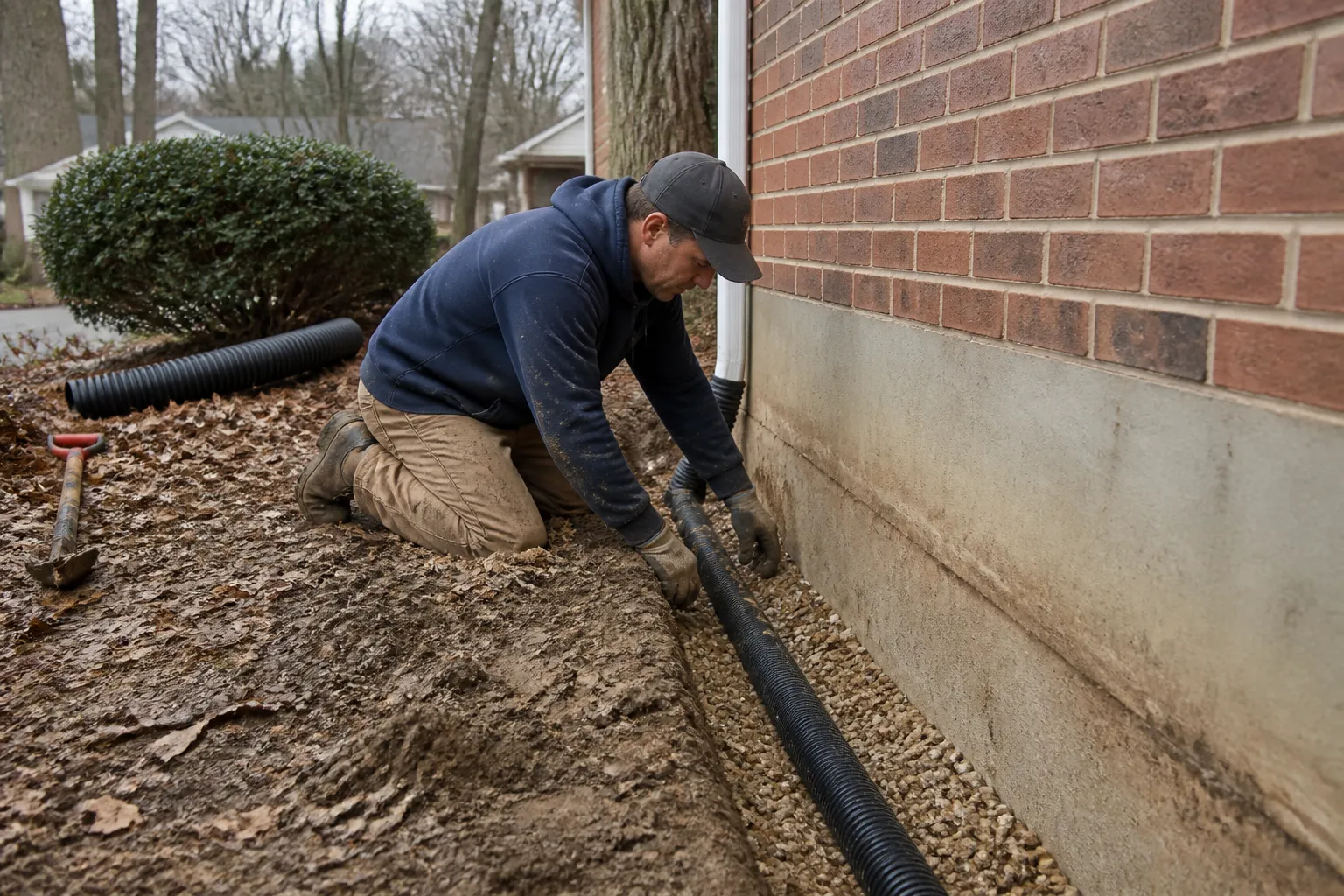
If the crawl space would benefit from French drain installation or another drainage improvement, we discuss that as part of the plan.
We keep the process direct and focused on what the crawl space actually needs, not on adding equipment that does not solve the source of the problem.
A sump pump often works better when paired with other crawl space repairs. Water removal matters, but moisture control also depends on limiting vapor, managing humidity, and protecting structural materials.
Not every crawl space needs the same combination. Some homes need a pump alone, while others need drainage, barrier work, and humidity control together. We explain the differences so you know what will actually help.
Standing water and chronic dampness can affect more than the crawl space floor. Over time, moisture can reach framing, masonry, piers, and other structural components that carry the load of the home.
That is why sump pump installation is often part of a larger repair conversation. Birmingham Crawl Space Experts also handles structural repair, framing repair, masonry and post-pier repair, dry rot repair, water damage repair, and termite damage repair when those problems show up alongside moisture issues. Catching water intrusion early gives you more options before damage spreads.
If water keeps returning after the area has been dried, or if wood components feel soft, stained, or weakened, the crawl space may need more than basic cleanup. A pump can help reduce future wetting, but damaged materials still need attention.
Where the water goes matters just as much as where it is collected. A sump pump installation should move water away from the home through a clear discharge path that suits the site conditions.
We evaluate the crawl space drainage layout before installation so the discharge line works with the rest of the system. In some homes, French drain installation improves collection around the perimeter. In others, the sump basin is the main collection point and the discharge line is the critical part. The right setup depends on the source and volume of water, not a one-size-fits-all plan.
When needed, we also discuss exterior waterproofing or crawl space drainage improvements that support the pump and help reduce repeat water buildup.
Homeowners often want to know what changes once a sump pump is installed. The most immediate difference is usually less standing water and less dampness at the lowest point of the crawl space. Over time, that can help reduce odors, limit moisture exposure, and make other repairs hold up better.
You should still expect the crawl space to need occasional attention, especially if the area had active water intrusion before. A pump is one part of a moisture management plan. If the crawl space also needs barrier work, dehumidification, or structural repairs, those items should be addressed alongside the pump for a more stable result.
Birmingham Crawl Space Experts keeps recommendations straightforward so you understand what is needed now and what can wait. If the crawl space is already showing signs of damage, we will point that out clearly before any work begins.
Homeowners across Birmingham and nearby areas such as Hoover, Bessemer, Trussville, Homewood, Vestavia Hills, Irondale, Gardendale, Center Point, Fultondale, Leeds, Helena, and Pelham call us when crawl space water becomes a recurring problem. The goal is simple: reduce moisture, protect structural materials, and keep the crawl space easier to maintain.
If you are dealing with standing water, damp air, or a crawl space that keeps taking on moisture, Birmingham Crawl Space Experts can assess the space and recommend the right sump pump installation for the conditions you have.
If water keeps collecting at the lowest part of the crawl space or dampness returns after rain, a pump may be a good fit. A site visit can confirm whether collection, drainage, or waterproofing work should come first.
It can help if the odors are tied to standing water or repeated dampness. If humidity or organic growth is also part of the problem, other moisture control work may be needed too.
Yes. In many cases, the pump is installed alongside repairs or moisture remediation. That way, the crawl space is addressed as a whole rather than treating the water and the damage separately.
Yes. Encapsulation and sump pump installation often support each other. The pump handles collected water, while encapsulation helps reduce moisture entering from exposed surfaces.
We look at the full water path and decide whether French drain installation, waterproofing, or other drainage improvements should be part of the plan with the pump.
The time depends on the crawl space size and what water signs are present. We inspect the space, identify the source patterns, and explain the installation approach that makes sense for the home.
Get Started
Share what you are seeing in your crawl space or basement, and we will help you identify the next best step for moisture control, repair, or drainage improvements.