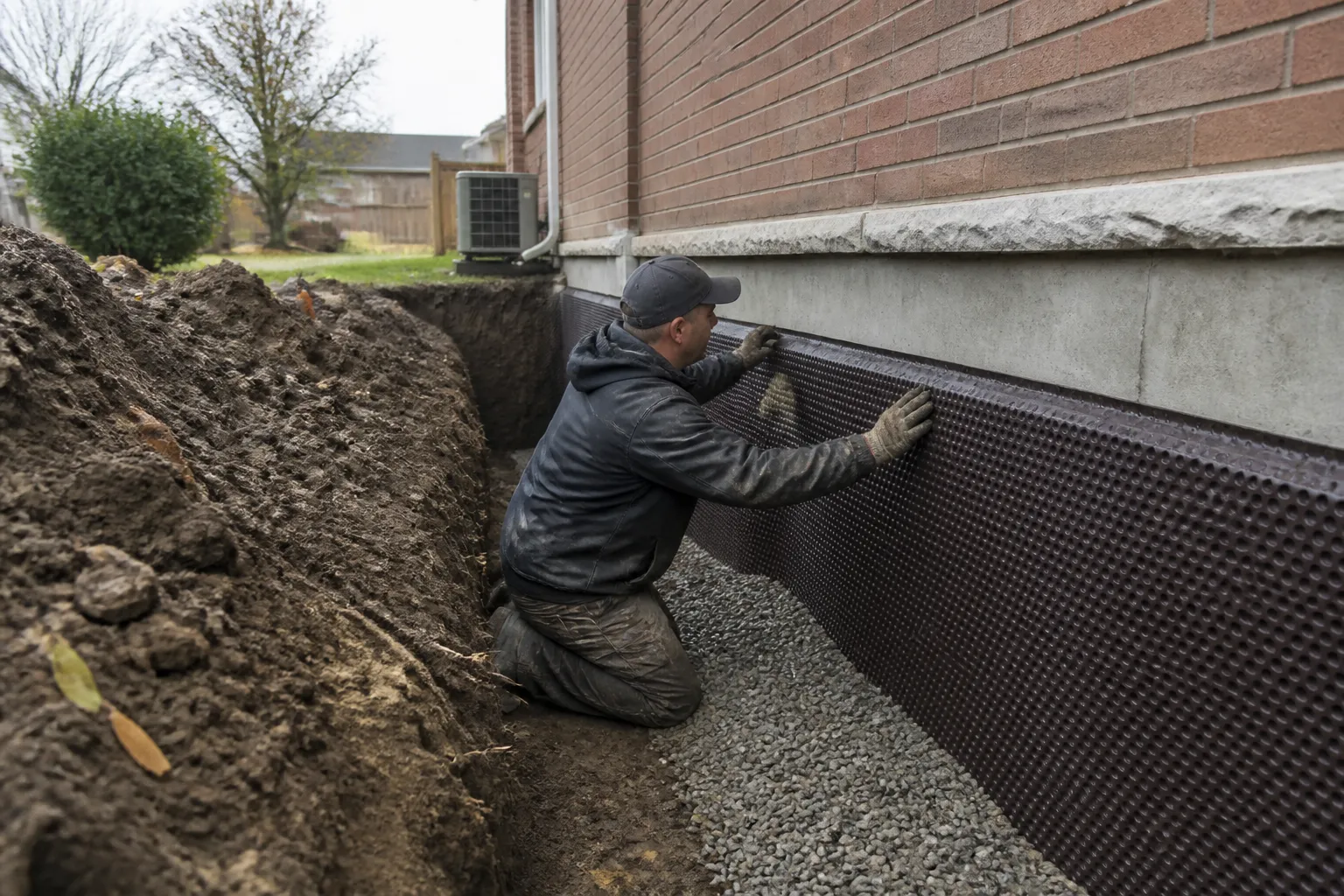
Water near the foundation can show up as damp crawl space air, musty odors, wood staining, or repeated moisture around the base of the home. If water keeps finding the same path toward your crawl space, the damage usually gets worse little by little.
Birmingham Crawl Space Experts helps homeowners across Birmingham identify where water is entering and build a exterior waterproofing plan that sends it away from the foundation before it causes more trouble. We focus on practical fixes that address drainage, runoff, seepage, and the conditions that leave crawl spaces damp.
Exterior waterproofing is worth a closer look when you notice water collecting where it should drain away, or when your crawl space keeps showing the same moisture patterns after rain. The problem often starts outside, even if the symptoms show up below the house.
When these signs show up together, the issue may be more than a single wet spot. It can point to surface water, drainage paths, or groundwater movement that needs to be redirected.
Exterior waterproofing is meant to keep water from pressing against the foundation or soaking the soil around it. Instead of waiting for water to enter the crawl space, we work to move it away from the structure earlier in the path.
Exterior systems can collect, redirect, and release water before it reaches vulnerable foundation areas. That may include drainage improvements, moisture barriers, or a combination of measures based on what the home needs.
When water builds up beside the foundation, it can increase moisture inside the crawl space and affect wood, insulation, and air quality. Redirecting that water helps reduce the load on the lower structure.
Keeping the area around the foundation drier can help reduce conditions that lead to repeated moisture damage, wood deterioration, and related repair work.
At Birmingham Crawl Space Experts, we start by looking at how water is entering, where it is collecting, and what path it is following once it reaches the property. That picture matters, because exterior waterproofing only works when the cause is matched to the solution.
This process helps keep the work focused on the actual source of the problem rather than covering up the symptoms.
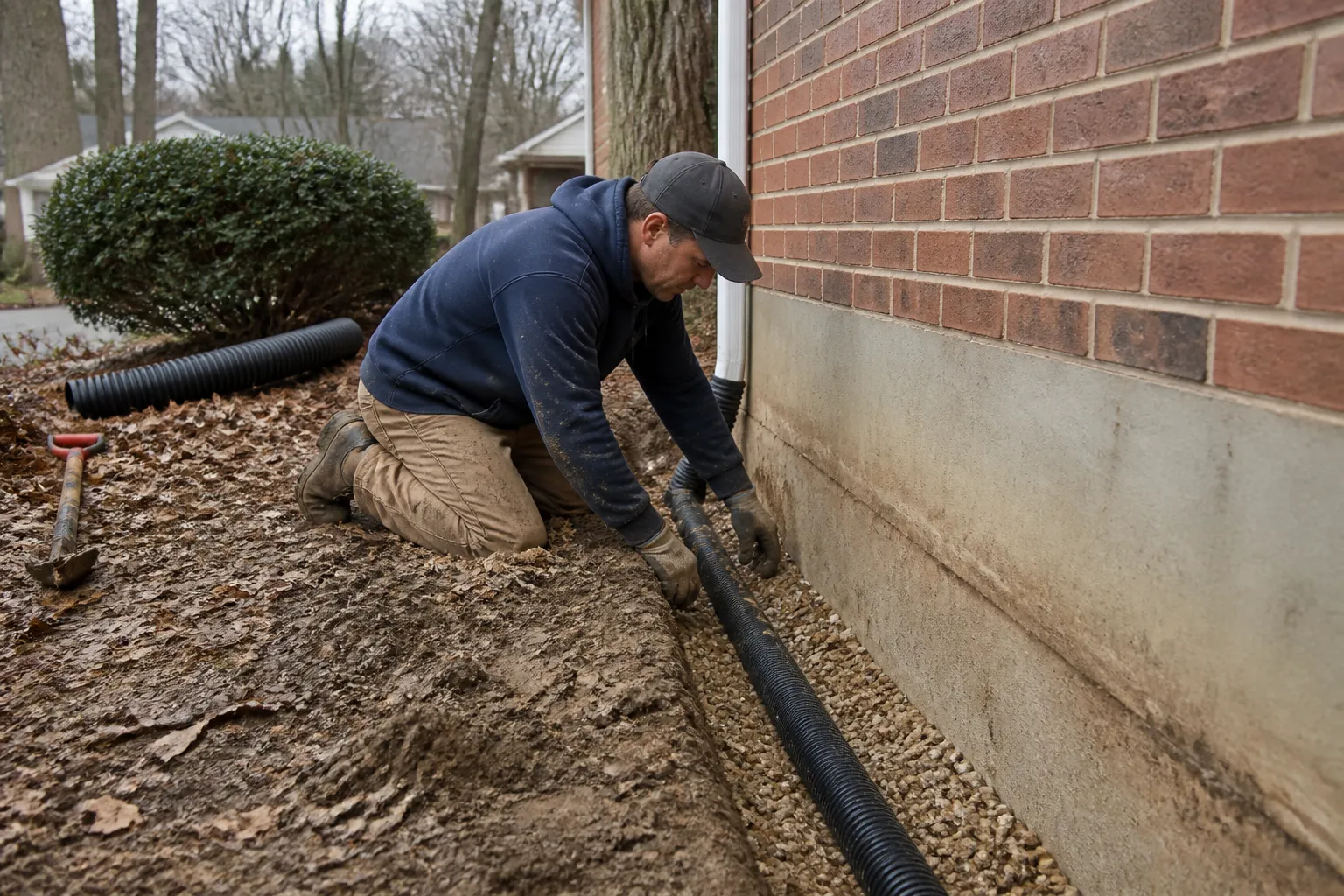
Exterior waterproofing often works best when water has a clear route away from the foundation. Depending on the property, that can mean using several drainage-related solutions together.
A French drain can help collect water and guide it away from areas where it would otherwise linger near the foundation. It is a practical option when runoff or groundwater keeps settling around the home.
When water needs a controlled exit point, a sump pump can help move collected water away from the crawl space before it rises and spreads.
Drainage components work best when they are part of a larger plan that considers the slope, soil saturation, and the foundation’s exposure to water. That is what makes exterior waterproofing more than a quick patch.
Good exterior waterproofing depends on the right materials for the problem. Some homes need a barrier that resists moisture movement, while others need drainage elements that keep water from building up against the foundation.
Using the right combination matters more than using more material. The goal is to solve the cause of the wet condition, not just slow it down.
Some exterior waterproofing projects uncover damage that needs more than drainage work. If moisture has already affected framing, masonry, posts, or nearby support materials, the repair plan may need structural work too.
Repeated wetness can weaken framing or lead to dry rot repair needs. Catching this early helps limit how far the damage spreads.
Moisture around support points can affect masonry or post-pier areas and make the crawl space less stable over time.
Where water damage or termite damage has already affected crawl space materials, exterior waterproofing can be part of a broader repair strategy that helps protect the structure moving forward.
Many homeowners first call after seeing signs that seem minor at first. Exterior waterproofing becomes important when those signs keep coming back or when crawl space conditions do not improve after the weather changes.
These are all signs that the exterior side of the home deserves attention, not just the crawl space itself.
Exterior waterproofing focuses on keeping water away from the foundation before it enters the crawl space. Crawl space work often addresses the conditions after water has already gotten inside.
Yes. If outside water is the source, controlling it at the exterior can reduce the damp conditions that show up below the home.
No. Some homes need drainage support, while others may need a different combination of waterproofing and moisture control based on how water is moving around the property.
Then the waterproofing plan may need to include structural repair, framing repair, or dry rot repair along with drainage work.
Yes. In many cases, a sump pump is part of a larger drainage plan that helps move collected water away from the crawl space.
Look for water paths, pooling, damp soil, and repeated moisture at the foundation line. A careful inspection can show whether the problem begins with exterior drainage, crawl space humidity, or both.
If your crawl space keeps showing moisture and you suspect water is entering from the outside, Birmingham Crawl Space Experts can take a close look and outline a clear next step. We serve homeowners from our Birmingham location at 120 19th St N #200, Birmingham, AL 35203, and we answer calls at +12052368603 during our open hours Monday through Sunday, 8:00 AM to 8:00 PM.
Exterior waterproofing is most effective when it is based on the actual way water behaves around your home. That is the kind of plan we build for Birmingham homeowners who want the crawl space to stay drier, more stable, and easier to protect over time.
Get Started
Share what you are seeing in your crawl space or basement, and we will help you identify the next best step for moisture control, repair, or drainage improvements.