Cracks that keep widening, doors that no longer close cleanly, or floors that feel uneven can all point to foundation trouble. When those signs show up, it is worth getting a clear look at what is happening before the damage reaches more of the home.
Birmingham Crawl Space Experts helps homeowners in Birmingham identify the cause of foundation movement and take the next practical step. We look at the structure, the crawl space conditions below it, and the signs that show whether the problem is settling, moisture related, or tied to damaged support components.
Foundation problems often start with small changes that are easy to ignore. Over time, those changes can become harder to miss. If you are seeing any of the items below, a closer inspection makes sense.
These symptoms do not always point to one single cause. Some are tied to moisture and wood damage below the home, while others relate to settling, weakened framing, or damaged masonry and post-pier supports. The important part is not guessing. It is getting the structure evaluated from the right angle.
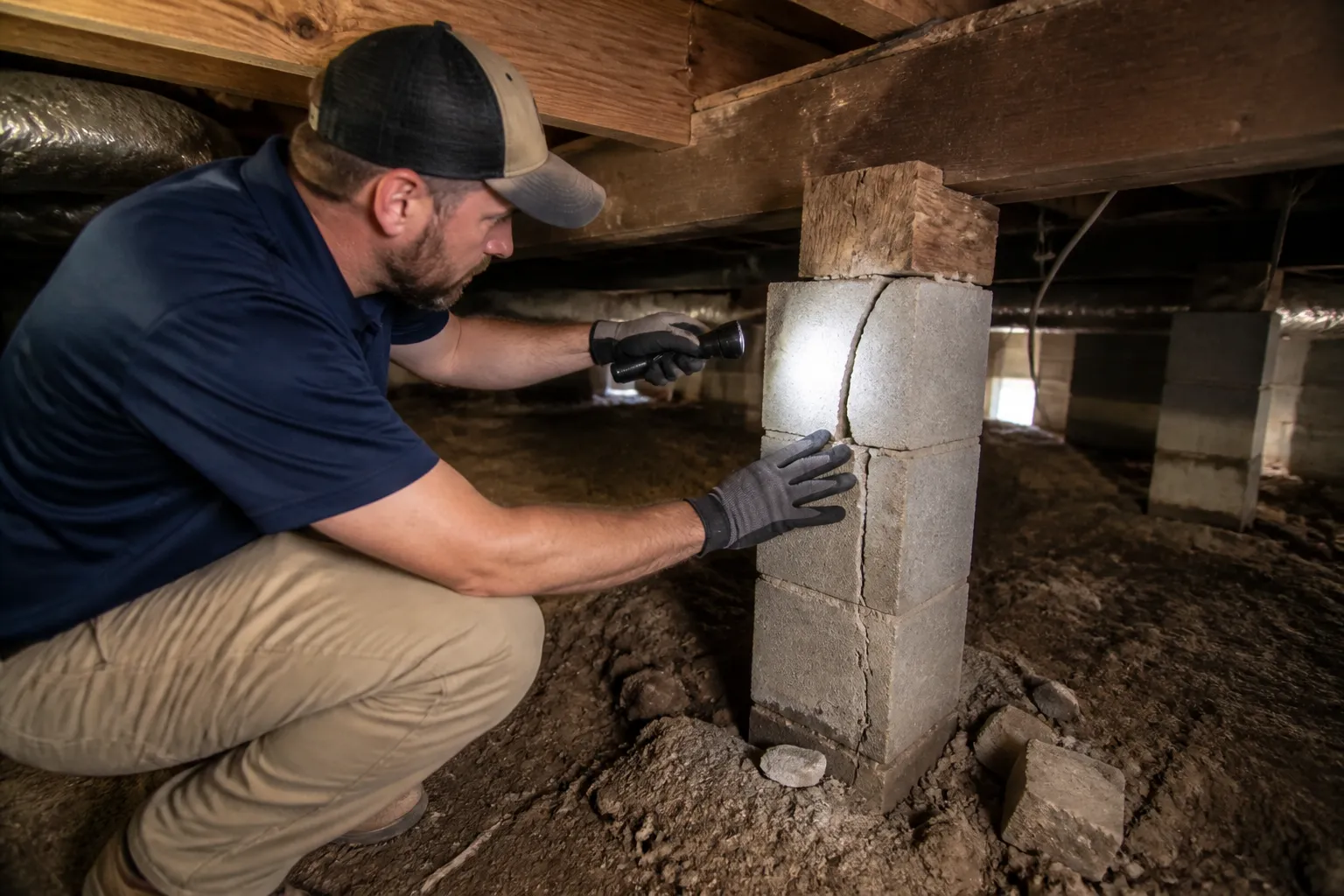
Foundation repair starts with a careful look at the parts of the home that carry the load. At Birmingham Crawl Space Experts, we look beyond the visible crack and trace the problem back to its source.
We check framing, beams, posts, piers, and other support points for movement, splitting, rot, or visible stress. If the crawl space structure has weakened, the symptoms often show up above before homeowners realize the source is below.
Moisture can soften wood, affect soil conditions, and create the kind of changes that lead to shifting. We look for signs of water intrusion, damp materials, poor ventilation, and areas that may benefit from vapor and moisture barriers or moisture remediation.
Not every crack means the same thing. We look at where it appears, how it runs, and whether it is paired with sagging, gaps, or other movement. That helps us separate cosmetic concerns from active structural concerns.
Foundation repair is not one single fix. The right solution depends on what is failing and what the home needs to stay steady. For some homes, the answer is structural work below the house. For others, it is drainage, moisture control, or repair to damaged supporting materials.
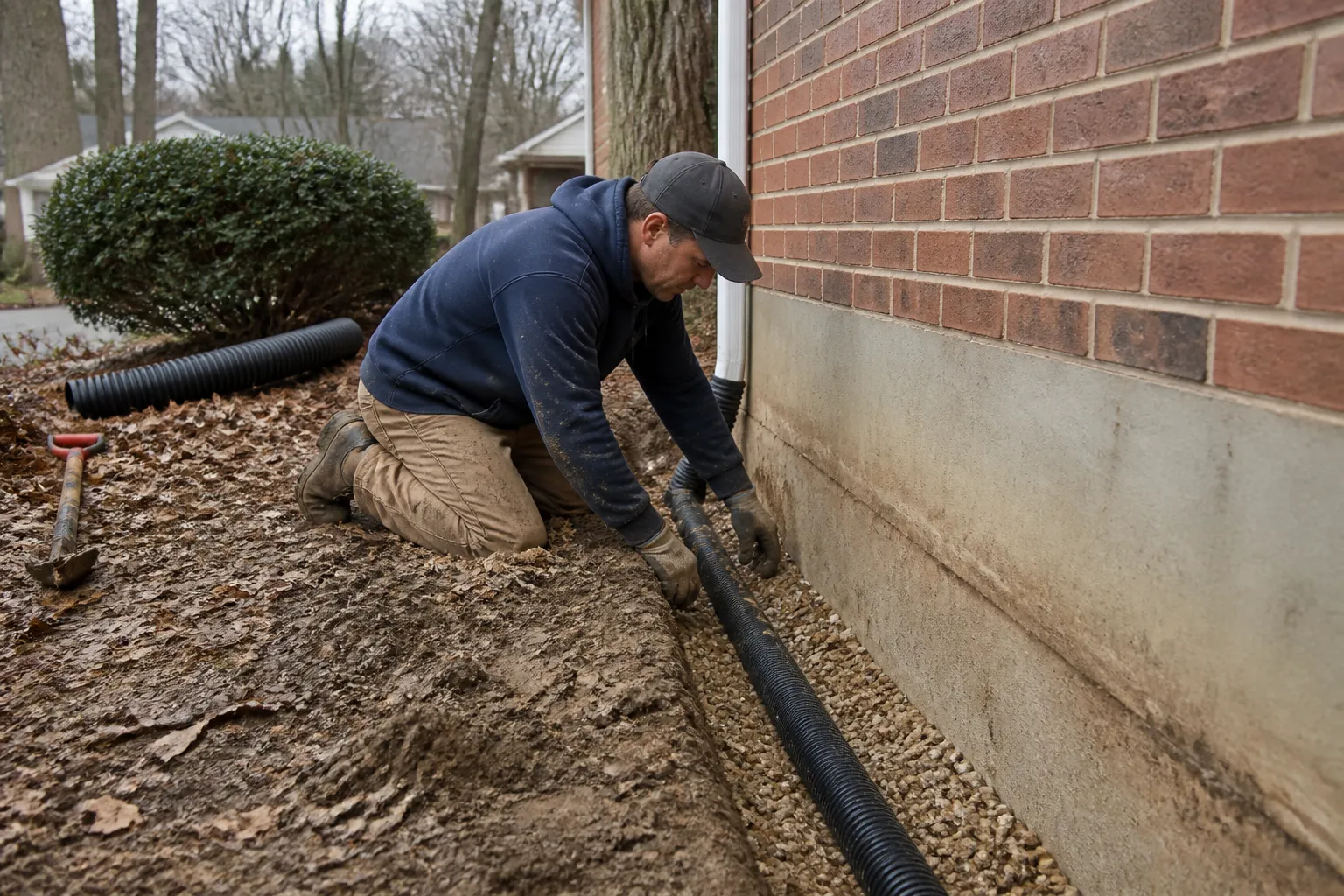
When drainage or groundwater contributes to foundation movement, we may also recommend crawl space waterproofing, French drain installation, or sump pump installation. Those solutions do not just manage water. They help reduce the conditions that keep stressing the structure.
Homeowners often want to know what happens after the problem is identified. Our process is straightforward and focused on giving you a clear plan.
This approach helps avoid surface-only fixes. A crack may be the most visible symptom, but the repair has to address the underlying cause if you want lasting stability.
Moisture is one of the most common reasons a foundation or crawl space begins to change over time. It can weaken wood, affect support materials, and create conditions that encourage more movement. That is why many foundation repairs also include crawl space moisture control.
Crawl space encapsulation and vapor and moisture barriers help separate the structure from damp ground conditions. When the crawl space stays drier, support materials face less stress and are less likely to deteriorate.
French drain installation and sump pump installation help manage water that enters or collects near the home. These solutions are often a strong fit when water is contributing to recurring dampness or structural wear.
High humidity can still affect a crawl space even when standing water is not obvious. Crawl space dehumidifier installation can help reduce moisture buildup and support a more stable environment under the home.
Foundation problems usually develop over time. They may begin with one issue and then grow as conditions continue to stress the structure. Some of the most common causes we see are below.
When more than one cause is present, the repair plan should address each one that is active. That may mean combining repair work with waterproofing, drainage, or moisture remediation instead of relying on a single fix.
Many foundation concerns start below the living space. That is why the crawl space matters so much. If the support area is damp, poorly ventilated, or damaged, the signs often show up as floor movement, cracked finishes, or shifting trim above.
Birmingham Crawl Space Experts takes the crawl space seriously because it can reveal the real source of structural trouble. By working from below and above, we can identify whether the home needs repair to the support system, protection from water, or both.
If you are seeing movement, cracking, or sagging, do not wait for the pattern to become clearer on its own. A prompt inspection can help limit the scope of repair and give you a realistic plan for the work ahead.
For homes in Birmingham, our foundation repair service is built around clear explanations and practical solutions. We focus on the structural problem, the moisture conditions that may be driving it, and the repairs that help keep the home steady for years to come. If you need help understanding what your home is telling you, Birmingham Crawl Space Experts is ready to take a look.
Common signs include cracks, sticking doors or windows, uneven floors, and gaps around trim or framing. Multiple signs together usually deserve a closer inspection.
Yes. Moisture can weaken wood, affect support materials, and contribute to movement below the home. That is why crawl space conditions are often part of the repair plan.
No. Some cracks are minor, while others point to active movement. The location, width, and pattern of the crack help determine how serious it is.
Depending on the cause, repairs may include structural repair, framing repair, masonry and post-pier repair, dry rot repair, or work tied to water and termite damage.
Yes. French drains, sump pumps, and waterproofing can help reduce the moisture conditions that place stress on the structure.
The crawl space often shows the source of the problem first. It can reveal moisture, support damage, or shifting that is not obvious from inside the home alone.
Get Started
Share what you are seeing in your crawl space or basement, and we will help you identify the next best step for moisture control, repair, or drainage improvements.