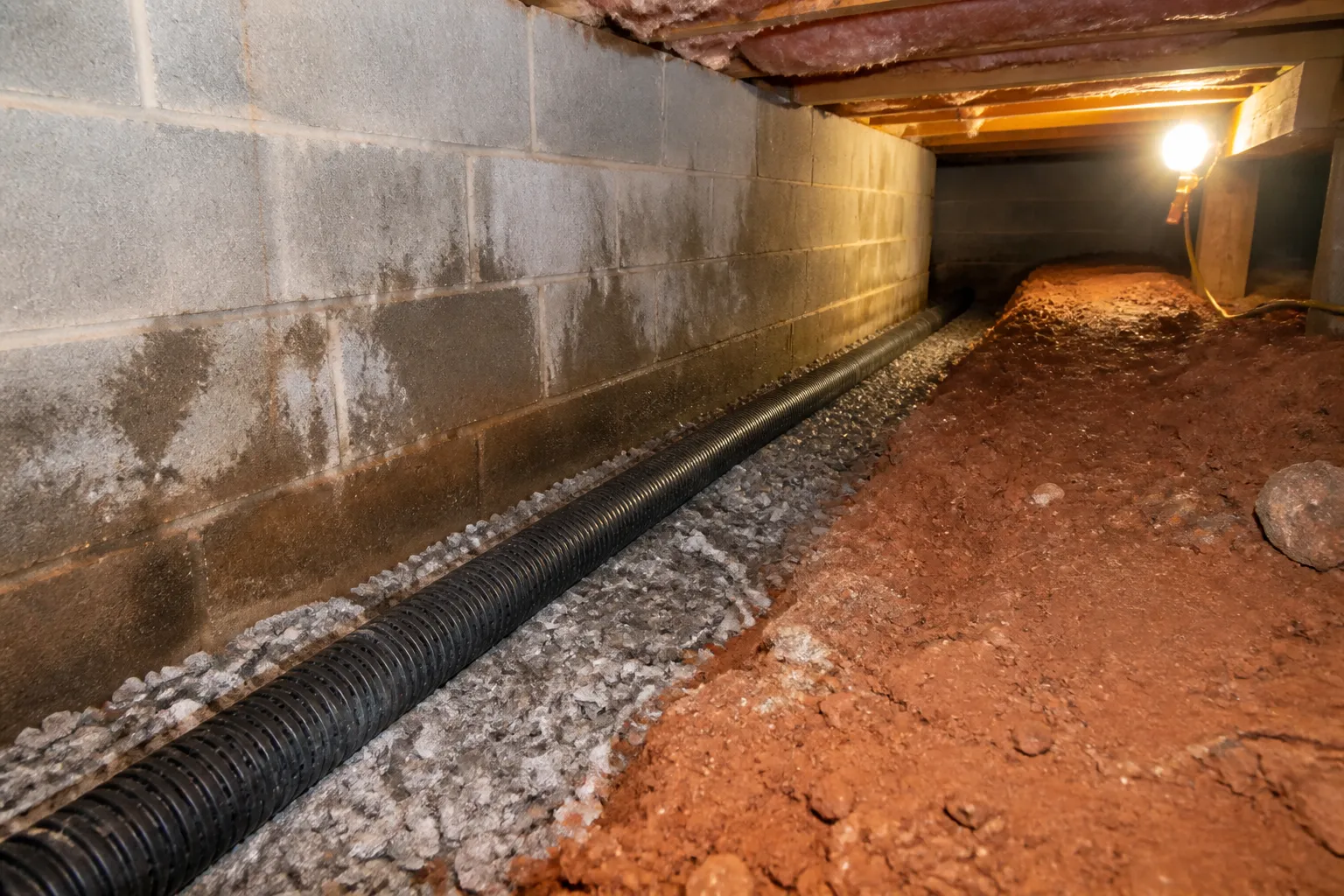
Musty odors, damp insulation, or water pooled beneath the home are signs your crawl space needs attention. If moisture keeps coming back after rain or the floor feels unsettled, the drainage under your home may not be carrying water away the way it should.
Birmingham Crawl Space Experts helps homeowners across Birmingham find the source of crawl space water problems and choose drainage solutions that match the space. We look at how water enters, where it collects, and what needs to happen next so the crawl space stays drier, cleaner, and easier to protect.
Crawl space drainage problems usually show up before major structural damage appears. Homeowners often notice small clues first, then realize the space has been holding moisture for a while.
If any of these sound familiar, drainage deserves a closer look before moisture starts affecting framing, insulation, or foundation materials.
Water does not need a large opening to create a crawl space problem. It can enter through soil movement, surface runoff, poor grading near the foundation, or weak points where water finds a path under the home. Once it gets inside, the crawl space may hold that moisture far longer than expected.
We often find water collecting at low spots, along foundation edges, or near areas where runoff repeatedly pushes toward the structure. In some homes, the issue is not a single leak. It is a pattern of water entering and settling before it has a chance to drain away.
When water lingers, it creates the right conditions for wood rot, odor, humidity buildup, and damage to insulation or supporting materials. Over time, drainage problems can move beyond a damp floor and become a wider crawl space repair concern.
The right drainage solution depends on how your crawl space is built and where the water is coming from. Birmingham Crawl Space Experts reviews the space carefully so we can recommend a practical approach instead of a one-size-fits-all fix.
Some homes need one solution. Others need a layered approach that handles both water entry and moisture buildup. The goal is to make the crawl space easier to keep dry over time.
A strong drainage plan starts with knowing where the water is coming from and where it is collecting. We look at the crawl space as a system, not as a single wet spot.
We check for standing water, damp surfaces, staining, and signs of repeated moisture exposure.
We look for low spots, drainage paths, and locations where water may be entering or pooling.
We assess framing, masonry, posts, and pier areas for water-related wear or damage.
We discuss practical fixes that fit the crawl space layout and the source of the moisture.
This approach helps us recommend drainage work that addresses the cause, not just the visible water.
Drainage and moisture control work together. Removing water is important, but so is reducing the humidity that remains after the crawl space gets damp. If moisture stays trapped, the space can still feel wet even when standing water is gone.
Vapor and moisture barriers can help block ground moisture from rising into the crawl space. In many homes, this is a strong companion to drainage work because it lowers the amount of moisture the space has to manage.
Humidity control can support a crawl space drainage plan by limiting lingering dampness. When combined with the right drainage system, it can help the space stay more stable through changing conditions.
Water problems do not always stop at the crawl space floor. If moisture has been present for a long time, supporting materials may need repair along with drainage work.
Addressing drainage first helps reduce the chance that repairs will be repeatedly stressed by the same moisture problem.
Many homeowners call after they see one clue, then discover several more once they know what to look for. A crawl space can affect the home above it, so small changes often matter.
You may notice:
When these conditions keep returning, drainage is often the missing piece. Treating the symptom without handling the water source usually leads to the same problem again.
Standing water, damp soil, musty odors, or repeated humidity are common signs. If moisture shows up more than once, the crawl space likely needs a closer drainage review.
Not always. Some crawl spaces need waterproofing, a vapor barrier, or humidity control along with drainage. We look at the full moisture pattern before suggesting the next step.
Yes, if the odor is tied to moisture, standing water, or damp materials. Reducing the water source often reduces the smell that travels into the home.
Then drainage may need to be paired with structural repair, framing repair, dry rot repair, or other moisture-related repairs. The crawl space should be stabilized before the damage spreads.
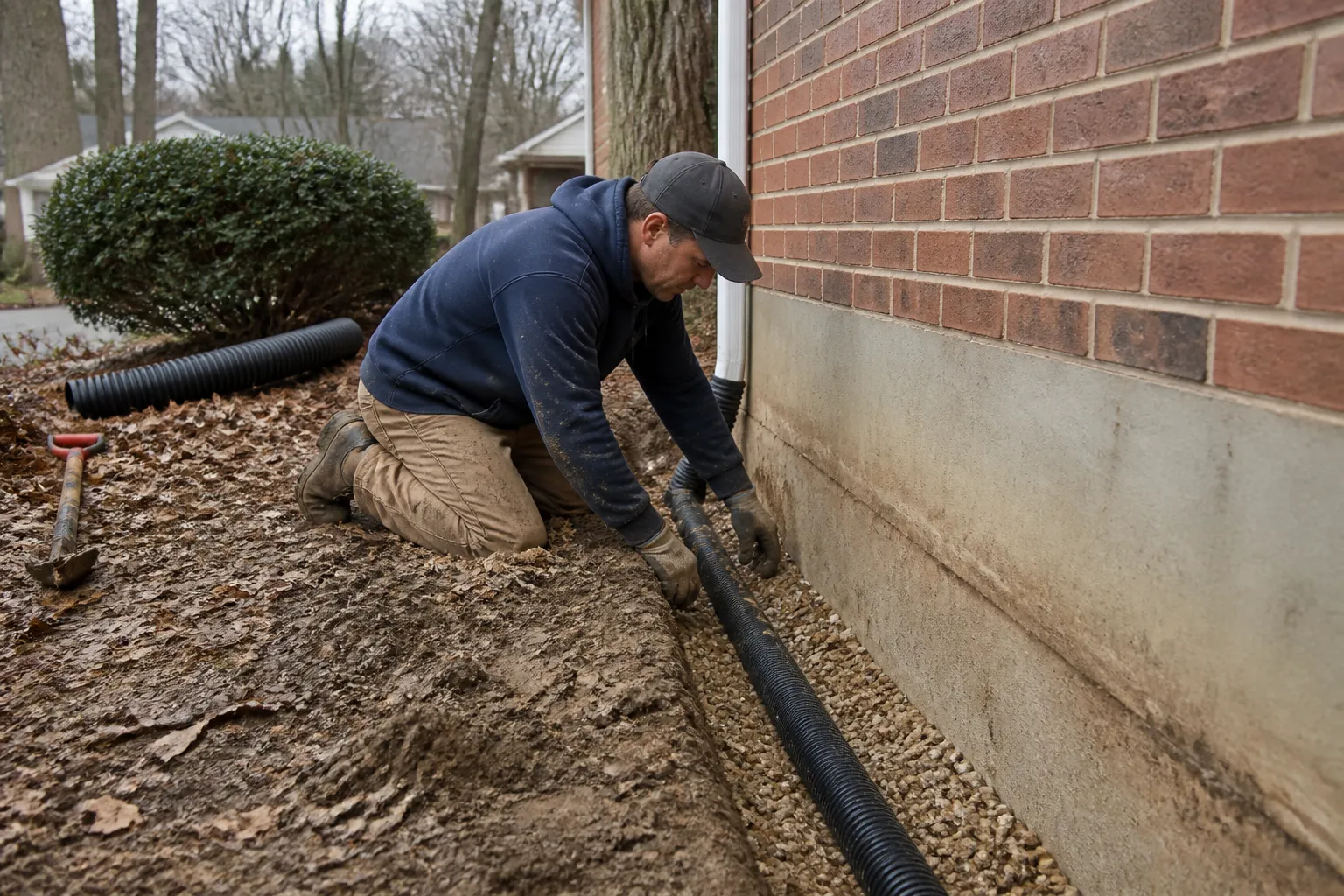
No. A sump pump is useful when water collects and needs to be removed, but some crawl spaces benefit more from French drains, waterproofing, or a combination of solutions.
Yes. Birmingham Crawl Space Experts handles crawl space drainage alongside repair work when moisture has affected supports, wood, masonry, or other structural areas.
We provide crawl space drainage service for homeowners across Birmingham and nearby communities such as Hoover, Bessemer, Trussville, Homewood, Vestavia Hills, Irondale, Gardendale, Center Point, Fultondale, Leeds, Helena, and Pelham. If your home has a damp crawl space, a drainage review is a practical place to start.
Birmingham Crawl Space Experts is based at 120 19th St N #200, Birmingham, AL 35203, and our office hours run Monday through Sunday, 8:00 AM to 8:00 PM. Call +12052368603 to discuss crawl space drainage concerns and the conditions you are seeing under your home.
Get Started
Share what you are seeing in your crawl space or basement, and we will help you identify the next best step for moisture control, repair, or drainage improvements.